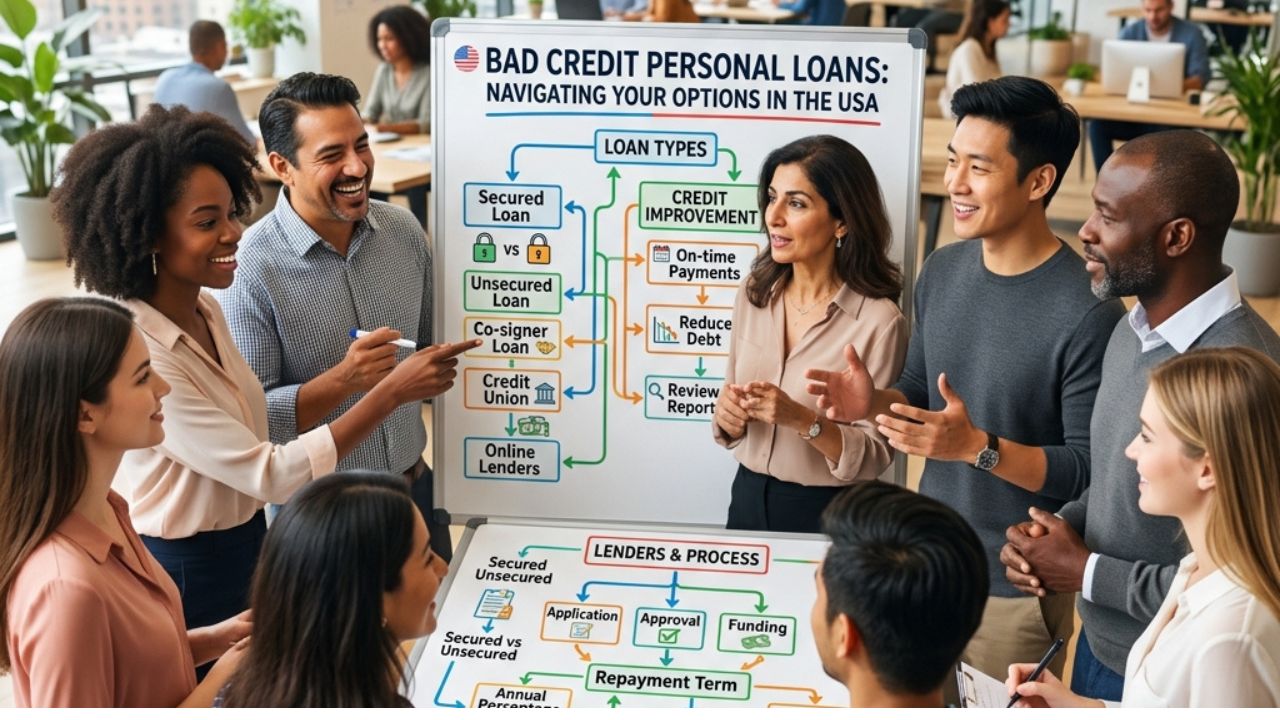
Bad credit doesn’t disqualify you from getting a personal loan in the USA. Lenders like Upstart, LendingClub, and Avant specialize in borrowers with low credit scores. Rates are higher, but the right loan—chosen carefully—can cover urgent expenses and even help rebuild your credit over time.
Getting a personal loan with bad credit feels like applying for a job with no experience. Lenders want proof you can repay, but your credit score tells a story they’re not sure they trust. The frustrating part? You may need that loan precisely to get back on solid financial footing.
The good news is that the personal loan market has changed significantly. A growing number of lenders now serve borrowers with credit scores below 580—what FICO classifies as “poor”—using alternative data like employment history and income to assess risk. That means more options, more competition, and better terms than borrowers with bad credit once faced.
This guide walks through everything you need to know: how bad credit affects your loan eligibility, which lenders are worth considering, what to watch out for, and how to put yourself in a stronger position for future borrowing.
How Does Bad Credit Affect Personal Loan Eligibility?
Your credit score is a three-digit number—typically between 300 and 850—that summarizes your credit history. FICO scores below 580 are considered poor, while scores between 580 and 669 fall into the “fair” category. Both ranges can make traditional lenders hesitant.
When lenders see a low score, they interpret it as higher repayment risk. The practical consequences include:
- Higher interest rates: APRs for bad credit borrowers commonly range from 18% to 36%, compared to 6%–12% for borrowers with good credit.
- Lower loan limits: Lenders may cap the amount you can borrow until you demonstrate repayment reliability.
- Stricter terms: Some lenders require collateral, a co-signer, or proof of stable income before approving applicants with low scores.
That said, a low credit score is not a permanent barrier. Many lenders weigh additional factors, including your debt-to-income ratio (DTI), employment status, and monthly cash flow.
What Types of Personal Loans Are Available for Bad Credit?
Not all bad credit loans are structured the same way. Understanding the main types helps you choose one that fits your situation.
Unsecured Personal Loans
These loans don’t require collateral. Approval is based on your creditworthiness and income. They’re the most common type and are offered by both online lenders and credit unions.
Secured Personal Loans
Secured loans require an asset—such as a savings account or vehicle—as collateral. Because the lender has a fallback, secured loans often come with lower interest rates and are easier to qualify for with bad credit.
Credit-Builder Loans
Offered primarily by credit unions and community banks, credit-builder loans are specifically designed to help borrowers establish or repair credit. The loan amount is held in a savings account while you make payments, and you receive the funds at the end of the term.
Payday Alternative Loans (PALs)
Available through federally chartered credit unions, PALs are small-dollar loans (typically $200–$2,000) with capped interest rates. They’re a regulated alternative to predatory payday loans.
What Factors Matter When Choosing a Bad Credit Lender?
Before submitting a single application, compare lenders across these key dimensions:
- APR range: The annual percentage rate reflects the true cost of borrowing, including fees. A lender advertising “low monthly payments” may still carry a high APR.
- Loan amounts and terms: Match the loan amount and repayment period to what you actually need. Extending a term lowers monthly payments but increases total interest paid.
- Origination fees: Some lenders charge 1%–8% of the loan amount upfront. This fee is often deducted from the disbursed amount, so a $5,000 loan might net you only $4,600.
- Prepayment penalties: If you plan to pay off your loan early, confirm the lender doesn’t penalize you for it.
- Soft vs. hard credit checks: Lenders that offer pre-qualification with a soft inquiry let you check your estimated rate without affecting your credit score.
- Funding speed: Some online lenders fund loans within one business day—a critical factor if you’re dealing with an urgent expense.
Top Lenders for Bad Credit Personal Loans in the USA
The following lenders are widely recognized for serving borrowers with less-than-perfect credit. Note that rates and terms vary by applicant and are subject to change.
Upstart
Upstart uses an AI-driven underwriting model that factors in education, employment history, and income—not just credit score. The platform accepts applicants with scores as low as 300 in some states. APRs range from roughly 6.4% to 35.99%, and loan amounts span $1,000 to $50,000. Funding is often available as quickly as the next business day.
Best for: Borrowers with thin credit files or non-traditional financial backgrounds.
LendingClub
LendingClub operates as a peer-to-peer lending platform and typically accepts applicants with credit scores of 600 or above. Loan amounts range from $1,000 to $40,000, with repayment terms of 36 or 60 months. Origination fees apply (2%–6%), and joint applications are available—a useful option if a co-borrower can strengthen your application.
Best for: Borrowers near the fair credit range who want the option to apply jointly.
Avant
Avant targets the middle-credit market, accepting applicants with scores as low as 580. APRs range from 9.95% to 35.99%, and loans from $2,000 to $35,000 are available. An administrative fee of up to 9.99% applies, so factor that into your cost calculations.
Best for: Borrowers with fair credit who need mid-range loan amounts.
OneMain Financial
OneMain Financial specializes in bad credit borrowers and offers both secured and unsecured loans. Loan amounts range from $1,500 to $20,000, and the lender operates physical branches across the USA—useful if you prefer in-person service. APRs are on the higher end (18%–35.99%), but approval odds are relatively strong for low-score applicants.
Best for: Borrowers who prefer a face-to-face experience or need a secured loan option.
Self (Credit-Builder Loan)
Self offers credit-builder loans specifically designed to help borrowers establish a positive payment history. You make fixed monthly payments into a savings account, and once the loan term ends, you receive the accumulated funds. Self reports payments to all three major credit bureaus—Equifax, Experian, and TransUnion.
Best for: Borrowers focused on building credit rather than accessing immediate funds.
How to Apply for a Personal Loan with Bad Credit: Step-by-Step
- Check your credit reports: Obtain free reports from AnnualCreditReport.com and review them for errors. Disputing inaccuracies can provide a quick score boost.
- Calculate your DTI: Divide your total monthly debt payments by your gross monthly income. Most lenders prefer a DTI below 40%.
- Pre-qualify with multiple lenders: Use soft-inquiry pre-qualification tools to compare offers without impacting your credit score.
- Gather documentation: Prepare proof of income (pay stubs, tax returns), government-issued ID, and bank account information.
- Submit your application: Choose the best offer and complete the formal application. This step typically triggers a hard credit inquiry.
- Review the loan agreement: Read the fine print—specifically the APR, fees, repayment schedule, and any penalties.
Strategies to Improve Your Credit Score Before (or After) Borrowing
If your loan need isn’t immediate, spending a few months improving your credit score can meaningfully reduce your borrowing costs. Key strategies include:
- Pay down existing revolving debt: Credit utilization—the percentage of available credit you’re using—accounts for 30% of your FICO score. Lowering utilization below 30% can produce noticeable score improvements.
- Make all payments on time: Payment history is the single largest factor in your FICO score (35%). Even one missed payment can cause a significant drop.
- Avoid opening multiple new accounts at once: Each hard inquiry temporarily lowers your score. Space out credit applications.
- Become an authorized user: Being added to a responsible family member’s credit card account can boost your score by extending your credit history.
Alternatives to Personal Loans for Bad Credit
A personal loan may not always be the right tool. Consider these alternatives before committing:
- Credit union loans: Federal credit unions often offer lower rates and more flexible qualification criteria than commercial banks.
- 0% APR credit cards: Some issuers offer introductory 0% APR periods for applicants with fair credit. If you can repay within the promotional window, this can be a cost-free option.
- Borrowing from family or friends: Informal loans carry no interest but require clear repayment agreements to protect the relationship.
- Employer salary advances: Some employers offer payroll advances as an employee benefit—interest-free and no credit check required.
- Nonprofit assistance programs: Organizations like the National Foundation for Credit Counseling (NFCC) connect borrowers with financial assistance and counseling resources.
Risks to Watch Out For When Borrowing with Bad Credit
The bad credit loan space attracts predatory lenders. Protect yourself by staying alert to these warning signs:
- Guaranteed approval claims: No legitimate lender approves all applicants without reviewing income or identity. Guaranteed approval is a red flag.
- Upfront fee requests: Reputable lenders deduct fees from the disbursed loan amount—they don’t ask for payment before releasing funds.
- Unlicensed lenders: Verify that any lender is registered to operate in your state through your state’s financial regulatory authority.
- Excessively short repayment terms: Payday loans with two-week repayment windows can carry effective APRs exceeding 400%. Avoid them whenever possible.
Making an Informed Decision About Bad Credit Loans
A personal loan with bad credit is a tool—one that can help you cover an emergency, consolidate debt, or start rebuilding your financial profile. But like any financial tool, its value depends entirely on how it’s used.
The most important step is comparison shopping. Upstart, LendingClub, Avant, OneMain Financial, and Self each serve different borrower profiles, and the right fit depends on your credit score, income, loan purpose, and timeline. Pre-qualify with at least two or three lenders before making a decision.
If borrowing is necessary right now, prioritize lenders that report to all three credit bureaus—each on-time payment becomes a small step toward the better rates and terms your future self will benefit from.
Frequently Asked Questions
What credit score do I need for a personal loan in the USA?
Most mainstream lenders require a minimum credit score of 580–600. Some lenders, like Upstart, accept scores as low as 300 by using alternative underwriting criteria such as income and employment history.
Will applying for a bad credit personal loan hurt my credit score?
Pre-qualification typically involves a soft credit inquiry, which does not affect your score. A formal loan application triggers a hard inquiry, which may reduce your score by a few points temporarily.
How much can I borrow with bad credit?
Loan amounts for bad credit borrowers typically range from $1,000 to $50,000, depending on the lender. Your income, DTI ratio, and the lender’s specific criteria will determine your actual limit.
Are bad credit personal loans safe?
Loans from licensed, reputable lenders are safe. Avoid lenders that guarantee approval, request upfront fees, or are not registered in your state.
Can a personal loan help rebuild my credit?
Yes. Lenders that report to Equifax, Experian, and TransUnion will add your payment history to your credit file. Consistent on-time payments can improve your score over the life of the loan.
What is the fastest way to get a personal loan with bad credit?
Online lenders like Upstart and Avant typically offer the fastest turnaround, with funding available as quickly as one business day after approval.