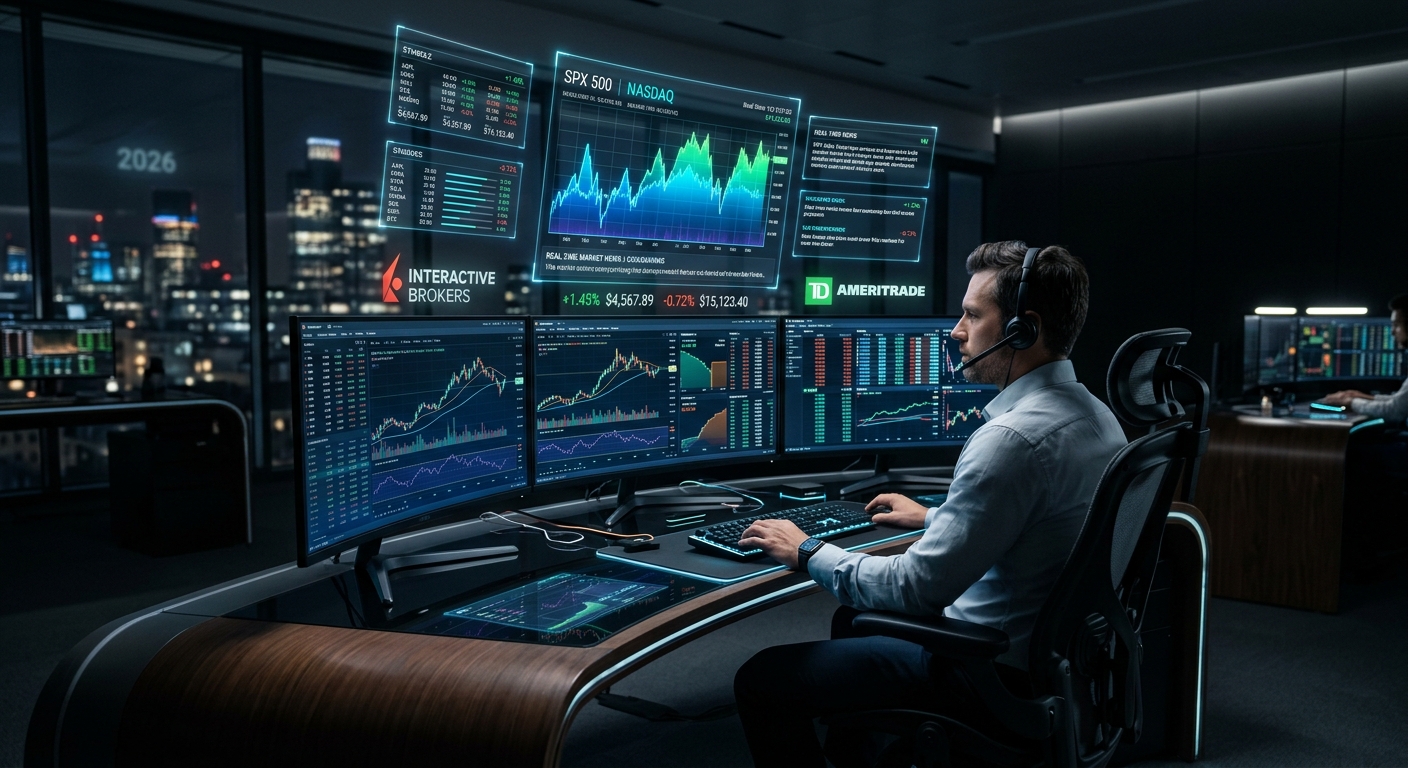
The best trading and investing tools for 2026 combine real-time data, AI-powered analytics, and automation to help investors act faster and manage risk more effectively. Platforms like Interactive Brokers and TD Ameritrade excel at execution, while TradingView and Seeking Alpha strengthen research. Pairing a strong brokerage with dedicated analysis and portfolio automation tools gives investors the clearest edge.
Investing in 2026 looks nothing like it did a decade ago. The playing field has leveled, giving retail investors access to charting software, predictive analytics, and portfolio automation that were once reserved for institutional trading desks. This shift hasn’t just changed how people invest — it’s changed who can compete at a high level.
With so many tools available, choosing the right combination matters more than ever. The right stack can help you spot opportunities before the broader market catches on, execute trades with precision, and protect your capital when conditions turn volatile. The wrong combination, on the other hand, can leave you buried in data you don’t know how to use.
This guide breaks down the trading platforms, research tools, and portfolio management solutions worth considering in 2026, along with guidance on which ones suit different types of investors.
Why Does the Right Trading Tool Actually Matter?
Advanced trading tools do more than display stock prices. They provide real-time market data, predictive analytics, and automated portfolio management that together shape how quickly and confidently you can act.
Here’s what separates a well-equipped investor from one working at a disadvantage:
- Speed of opportunity recognition. Tools with real-time alerts and screening capabilities help you identify setups before they fully play out, rather than reacting after the fact.
- Execution precision. Low-latency order routing and advanced order types reduce slippage, which matters even more for active traders working with tight margins.
- Risk management. Position-sizing calculators, stop-loss automation, and volatility indicators help protect your capital during unexpected downturns.
- Removal of emotional bias. Automation handles rules-based decisions, like rebalancing or executing a pre-set stop-loss, without hesitation or second-guessing.
Choose tools that emphasize automation and risk controls if capital preservation matters more to you than chasing maximum short-term gains. Choose tools weighted toward research depth and charting if you’re an active trader who thrives on finding your own edge.
What Are the Top Trading Platforms for 2026?
Your trading platform is the foundation of your entire investing operation. It’s where you execute trades, monitor positions, and often conduct your first layer of research. Here are four platforms that continue to stand out.
Interactive Brokers: Best for Active and Global Traders
Interactive Brokers remains a favorite among serious traders for its advanced charting tools, low commissions, and access to an extensive range of asset classes, including stocks, options, futures, and international markets. If you trade frequently or want exposure to global exchanges, Interactive Brokers’ depth is hard to match.
TD Ameritrade: Best for Research-Driven Investors
TD Ameritrade pairs a user-friendly interface with powerful research capabilities, making it a strong choice for investors who want institutional-grade insights without a steep learning curve. Its platform is particularly well suited to investors who want to combine education with execution.
E*TRADE: Best for Beginners Who Plan to Grow
E*TRADE offers comprehensive tools designed to serve both beginners and advanced traders. New investors benefit from intuitive account setup and educational resources, while more experienced users can access advanced order types and in-depth analytics as their strategies mature.
Webull: Best for Cost-Conscious, Data-Driven Traders
Webull built its reputation on commission-free trading, extended trading hours, and real-time data access. For investors who want professional-level market information without the professional-level price tag, Webull remains one of the most accessible options available.
Choose Interactive Brokers if you trade across multiple asset classes or markets. Choose TD Ameritrade if you value research tools alongside execution. Choose E*TRADE if you’re a beginner who wants room to grow. Choose Webull if cost and real-time access matter most.
Which Research and Analysis Tools Give Investors an Edge?
Execution is only half the equation. The other half is knowing what to trade and when. These research platforms help investors build that conviction.
Bloomberg Terminal: Professional-Grade Market Intelligence
The Bloomberg Terminal remains the gold standard for institutional-level market data and analytics. It delivers real-time news, in-depth financial data, and advanced analytical tools used by hedge funds, banks, and serious individual investors who need comprehensive market visibility.
Refinitiv: Comprehensive Data Meets AI-Powered Insight
Refinitiv combines deep financial data coverage with AI-powered insights, helping investors sift through massive data sets to find relevant signals faster. Its strength lies in blending traditional financial analysis with modern machine-learning capabilities.
TradingView: Advanced Charting for Technical Traders
TradingView has become a go-to platform for technical analysis, thanks to its advanced charting tools and large library of community-built indicators. Its social features also let traders share and refine strategies with a global community.
Seeking Alpha: Crowd-Sourced Investment Ideas
Seeking Alpha offers crowd-sourced investment ideas alongside professional analyst ratings, giving investors a broader range of perspectives before making decisions. It’s particularly useful for investors who want to stress-test their own thesis against outside viewpoints.
Choose Bloomberg Terminal or Refinitiv if you need institutional-depth data and can justify the cost. Choose TradingView if technical analysis drives your strategy. Choose Seeking Alpha if you want diverse investment perspectives before committing capital.
How Can Portfolio Management and Automation Tools Improve Your Returns?
Once you’ve chosen a platform and built your research process, automation tools help you maintain discipline over time. Robo-advisors and portfolio management platforms handle rebalancing, tax-loss harvesting, and diversification based on pre-set rules, reducing the emotional decision-making that often undermines long-term returns.
These tools are especially valuable for investors who want market exposure without actively managing every position. Rather than monitoring the market constantly, automated platforms rebalance portfolios on a schedule or trigger, helping keep your asset allocation aligned with your goals even during volatile periods.
Choose automated portfolio tools if you prefer a hands-off approach and want to minimize emotional trading decisions. Choose active platforms and research tools if you want direct control over individual trade decisions and are comfortable dedicating time to ongoing analysis.
Building Your 2026 Investing Toolkit
No single platform does everything well, which is why most successful investors in 2026 use a combination of tools rather than relying on just one. A typical stack might include a brokerage like Interactive Brokers or TD Ameritrade for execution, a research tool like TradingView or Seeking Alpha for idea generation, and a portfolio management tool to maintain long-term discipline.
The goal isn’t to collect every tool available. It’s to build a toolkit that matches your trading style, risk tolerance, and the amount of time you’re willing to dedicate to managing your investments. Start by identifying where you currently struggle most — whether that’s execution speed, research depth, or consistency — and choose tools that directly address that gap.
As markets continue to reward speed, data, and discipline, the investors who thrive in 2026 will be the ones who treat their tool stack as seriously as their strategy.
Frequently Asked Questions
What’s the best trading platform for beginners in 2026?
E*TRADE is well suited to beginners thanks to its intuitive interface and educational resources, while still offering room to grow into more advanced features as your experience increases.
Do I need both a brokerage and a separate research tool?
Not necessarily, but pairing a brokerage like TD Ameritrade with a dedicated research tool like TradingView or Seeking Alpha often gives investors deeper insight than relying on a single platform’s built-in features.
Are automated portfolio management tools worth it for active traders?
Automated tools are generally better suited to hands-off, long-term investors. Active traders who want direct control over individual trades may prefer platforms with robust manual research and execution tools instead.
How much does professional-grade market data cost?
Tools like the Bloomberg Terminal and Refinitiv are priced for institutional and high-volume investors, while platforms like Webull and TradingView offer substantial real-time data access at little to no cost.
What’s the biggest risk of using too many trading tools at once?
Overloading your workflow with competing data sources and alerts can lead to analysis paralysis. Focus on a small, complementary set of tools rather than trying to use everything available.